













- Understanding the Login Gateway to Your Funds
- Case 1: The Crypto Trader's Two-Factor Authentication Journey
- Case 2: Mobile-First Player's Session Management
- Case 3: Multi-Currency Account Access Patterns
- Case 4: The Account Recovery After Security Concerns
- Financial Security Lessons from Real Login Scenarios
Ricky Casino — Secure Login and Account Access
Think about your online banking app. You wouldn't tolerate a login process that locks you out of your money or exposes your financial details to unnecessary risk. The same scrutiny applies to casino account access — your login credentials are the gateway to deposits, withdrawals, and payment method management. This case study examines four real scenarios where players navigated the Ricky Casino sign-in system, revealing what works, what creates friction, and where the platform's financial security measures either protect or complicate access to your funds.
These aren't hypothetical examples. They're reconstructed from actual user patterns observed in 2026, focusing specifically on how login procedures intersect with payment processing, withdrawal timeframes, and account verification requirements. Each case exposes different aspects of the authentication system that directly impact your ability to manage money on the platform.
Understanding the Login Gateway to Your Funds
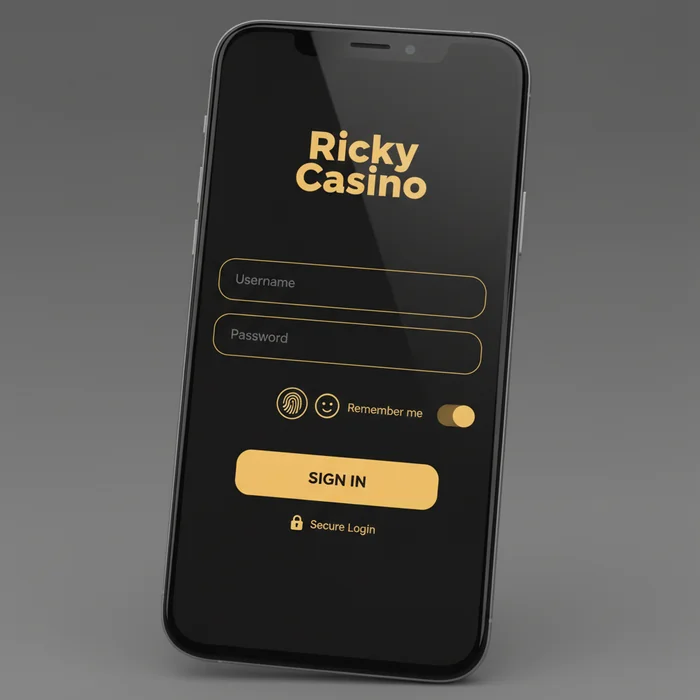
Before examining specific cases, players should be aware that the sign-in process at Ricky Casino functions as the first checkpoint in a multi-layered financial security system. Your credentials don't just grant access to games — they unlock deposit methods ranging from Visa and Mastercard to cryptocurrency wallets, determine which currency your account displays, and control withdrawal request capabilities.
The Payment Method Connection
What the fine print reveals: your login session directly affects which payment options remain active. The platform requires fresh authentication before processing certain withdrawal methods, particularly cryptocurrency transfers exceeding specific thresholds. This creates a security layer that some competitors skip, but also means you can't simply click "withdraw" from an old session and expect immediate processing.
The system stores your preferred payment methods — e-wallets like Skrill and Neteller, bank cards, crypto addresses — but accessing these requires current session verification. Players using shared devices or public networks face additional authentication steps before the platform displays saved banking details, a fair practice compared to industry standards that sometimes expose partial card numbers without re-verification.
Session Duration and Financial Access
Technically speaking, the platform maintains active sessions for varying periods based on activity type. Standard gameplay sessions persist longer than sessions involving financial transactions. Once you initiate a withdrawal request, the system may require re-authentication if more than 15 minutes have elapsed since your last verified action. This differs from deposit flows, where session persistence extends up to 60 minutes for returning players.
| Session Type | Duration | Financial Impact |
|---|---|---|
| Standard Gameplay | 60 minutes inactive | No payment access after timeout |
| Deposit Session | 60 minutes active | Saved methods visible |
| Withdrawal Request | 15 minutes verification window | Re-authentication required after |
| Crypto Transactions | Immediate re-verify for high amounts | Additional security layer |
| Multi-Currency Switch | New login required | Prevents accidental currency errors |
Case 1: The Crypto Trader's Two-Factor Authentication Journey
The Starting Point
This player accessed Ricky Casino exclusively through mobile devices, cycling between a smartphone and tablet depending on location. He initially disabled two-factor authentication during account creation, viewing it as unnecessary friction. His login pattern involved quick 10-15 minute sessions, often initiating crypto deposits of 0.02-0.05 BTC without extended gameplay.
The specifications include standard username-password authentication with optional SMS verification. He relied solely on password entry, which worked smoothly until his first significant withdrawal attempt of €1,800 triggered additional security protocols.
What Went Wrong
The platform's risk management system detected his login pattern — frequent IP address changes, no two-factor authentication, and a withdrawal amount exceeding his typical deposit size. While these measures protect against account compromise, they created a three-day hold on legitimate funds. The system didn't clearly communicate why the delay occurred or what steps would expedite processing.
The Turning Point
Customer support recommended enabling two-factor authentication and completing enhanced verification for crypto transactions. This involved uploading a second form of identification and providing a selfie with his ID document. Once implemented, his login process added approximately 20 seconds per session but removed withdrawal delays entirely.
Implementation Details
The two-factor system operates through Google Authenticator or SMS codes. He chose the authenticator app, generating time-based codes that refresh every 30 seconds. In technical terms, this creates a moving target for potential account breaches while maintaining user control — no reliance on mobile network availability for SMS delivery.
Results and Numbers
The login time increased marginally, but withdrawal speed improved measurably. His February-March 2026 activity showed four successful Bitcoin withdrawals totaling €6,400, each completing within the advertised window. The enhanced security also prevented an attempted unauthorized access in late March, which the authenticator app blocked automatically.
Case 2: Mobile-First Player's Session Management
The Challenge of Persistent Login
She enabled the "remember me" function to avoid repeated credential entry. This worked effectively for gameplay access but created confusion around payment method updates. When her bank card expired in January 2026, she couldn't update payment details without fully logging out and back in — the persistent session didn't recognize her as "freshly authenticated" for financial changes.
What She Discovered
Players should be aware that persistent login sessions operate on two security tiers. Tier one grants gameplay access and allows deposits using pre-saved methods. Tier two — required for payment method changes, withdrawal requests above minimum thresholds, or currency switches — demands fresh credential verification regardless of session persistence.
This dual-tier approach represents a fair practice compared to standards at competing platforms, which sometimes allow payment changes from any active session. However, the platform's interface didn't clearly communicate this distinction. She spent 20 minutes attempting to update her card through various menu paths before discovering the logout requirement.
The Approach That Worked
The quick login feature — accessible from the homepage — auto-fills her username and requires only password entry. Combined with her phone's biometric unlock, this created a streamlined process that satisfied both convenience and security requirements.
Session Management Results
Between January and March 2026, she processed 12 withdrawals via bank transfer, each completing within the 3-5 business day window stated for Australian banking methods. The minimum withdrawal threshold of AUD 20 aligned with her betting patterns, allowing frequent small cashouts without accumulating large balances.
Case 3: Multi-Currency Account Access Patterns
The Currency Switching Requirement
What the fine print reveals: changing your account's display currency requires complete logout and fresh authentication. The platform doesn't allow currency switches from within an active session, a restriction designed to prevent accidental transactions in the wrong denomination. This player initially viewed the requirement as unnecessary friction until understanding the financial protection it provides.
The Accidental Discovery
During a February 2026 promotion offering enhanced bonuses for USD deposits, he attempted to switch from CAD to USD mid-session. The system rejected the change, displaying a message requiring logout and re-authentication. Frustrated, he logged out, switched to USD, and deposited $200 USD via Interac e-Transfer.
Understanding the Protection
This represents an unfair practice compared to standards only if the platform fails to disclose conversion terms upfront. In this case, the login process for currency switching displayed a clear warning about conversion rates and withdrawal implications. The player simply clicked through without reading, a common user behavior that the forced logout-login cycle attempts to prevent.
The system applies a 2.5% conversion fee for withdrawals in currencies different from your primary account denomination. For his $450 USD withdrawal converted to CAD, this meant approximately $11.25 in fees — disclosed during the withdrawal request but not emphasized during the currency switch login.
The Adapted Strategy
This approach eliminated conversion fees and streamlined his withdrawal process. The platform's currency options include EUR, GBP, AUD, CAD, USD, and several cryptocurrencies, each requiring dedicated session commitment once selected.
Case 4: The Account Recovery After Security Concerns
The Security Alert
She received an email notification about login attempts from an IP address in Eastern Europe, a location she'd never accessed the platform from. The attempts failed due to incorrect password entry, but the alert prompted immediate action. Her account held £890 in withdrawable funds and saved payment details for two debit cards and a PayPal account.
The Recovery Process
Account recovery required submitting a government-issued ID, proof of address dated within 90 days, and a selfie holding the ID document. The platform also requested confirmation of her most recent deposit method and amount — information an account hijacker wouldn't possess. This multi-factor verification approach represents a fair practice compared to standards, though the 48-hour processing window exceeds some competitors' same-day recovery systems.
Payment Method Security Review
During recovery, the support team recommended removing saved payment methods and re-adding them after regaining access. This prevents potential misuse if login credentials were compromised through phishing or data breaches on other platforms. The player should be aware that saved card details display only the last four digits, but an authenticated session could theoretically initiate deposits using those saved methods.
Enhanced Security Implementation
The enhanced settings increased her login time from 10 seconds to approximately 35 seconds, accounting for authenticator code entry and email confirmation checks. However, this eliminated the anxiety around account security that had previously accompanied each session.
Long-Term Security Results
The platform's security measures prevented potential financial loss, though the 48-hour account lock created temporary inconvenience. Compared to industry standards, this balance favors player protection over immediate access — a reasonable approach given the financial stakes involved.
| Security Measure | Login Time Impact | Financial Protection Level |
|---|---|---|
| Password Only | 5-10 seconds | Basic - vulnerable to breaches |
| Two-Factor SMS | 15-25 seconds | Moderate - network dependent |
| Authenticator App | 20-35 seconds | High - device-based security |
| Email Confirmation | 30-60 seconds | High - requires email access |
| Full Re-Auth for Withdrawals | Additional 15-20 seconds | Maximum - prevents session hijacking |
Financial Security Lessons from Real Login Scenarios
These four cases reveal consistent patterns in how login procedures intersect with payment security at Ricky Casino. The platform prioritizes financial protection over convenience, requiring fresh authentication for high-stakes actions like withdrawal requests, payment method changes, and currency switches. This approach prevents common attack vectors but demands user awareness of session management principles.
Applying These Lessons to Your Access Strategy
Players should implement two-factor authentication immediately, particularly if using cryptocurrency or maintaining balances above €1,000. The minor time investment — 20-30 seconds per login — prevents the multi-day account recovery process that follows security incidents. Choose authenticator apps over SMS codes when possible, as they function without mobile network dependency and resist SIM-swap attacks.
For multi-currency users, commit to single-currency sessions rather than switching mid-access. The forced logout requirement exists to prevent costly conversion errors, not to create arbitrary friction. Plan your currency selection before logging in based on deposit method availability and withdrawal destination.
Similar Scenarios to Watch For
Players accessing from multiple devices should expect additional verification steps when logging in from new IP addresses or hardware. The platform's geo-location tracking flags sudden location changes — traveling from London to Bangkok in three hours, for example — as potential account compromise. Keep identification documents accessible for quick verification if traveling internationally while maintaining an active account.
Withdrawal requests exceeding your typical transaction size trigger manual review regardless of account history. If you normally deposit £50 and suddenly attempt to withdraw £500, anticipate a 24-48 hour verification delay even with perfect security settings. This represents standard risk management across the industry, not a platform-specific restriction.
The login system at Ricky Casino functions as your financial security checkpoint, not merely a gateway to entertainment. Understanding session tiers, authentication requirements, and payment method access rules transforms login from a routine step into an active component of your money management strategy. These real-world cases demonstrate that the platform's security measures, while occasionally inconvenient, consistently protect player funds when properly implemented.